Link Building for Local Businesses: Strategies That Actually Work in 2026
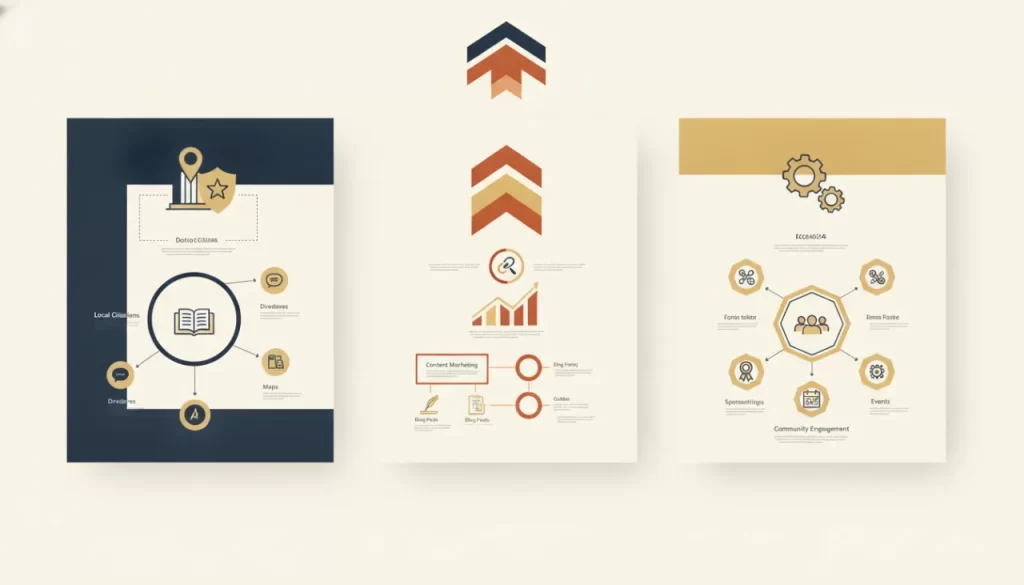
Link building has a reputation problem. Too many businesses have burned money on link schemes, paid directories, or overseas outreach campaigns that produced nothing useful — or worse, triggered Google penalties. The reality is that the best links a local Texas business can earn don’t come from an outreach spreadsheet. They come from doing what local businesses already do well: showing up in the community.
Why Backlinks Still Matter in 2026
Google’s Helpful Content updates and its growing emphasis on E-E-A-T have shifted emphasis toward content quality and topical depth. But backlinks remain a core ranking signal. A link from a respected local source tells Google that someone other than you believes your site is worth pointing to. That external validation still carries real weight — especially for competitive local markets where everyone’s content quality is similar.
The difference in 2026 is that link quality matters far more than volume. One link from your local newspaper’s coverage of a community event is worth more than fifty links from generic directories nobody uses.
Local Press Mentions: The Highest-Value Link Source
Texas has a strong network of local news sites, neighborhood blogs, and community publications — from the Dallas Morning News to local neighborhood HOA newsletters to regional industry trade sites. Getting featured in any of these earns both a high-authority backlink and genuine brand exposure to your actual customer base.
Practical ways to earn press coverage:
- Sponsor or participate in a community event and get listed on the event page
- Contribute expert commentary to a local reporter covering a relevant story
- Issue a genuine announcement (expansion, new services, milestone) to local outlets
- Publish original local research or data that a journalist would find useful
Chamber of Commerce and Association Memberships
Most Texas chambers of commerce maintain a member directory with linked business listings. The same applies to professional associations, trade organizations, and industry groups. These aren’t always high-authority links individually, but they’re consistent local citation signals that collectively reinforce your relevance in your market. If you’re not listed in your local chamber directory, that’s a free backlink you’re leaving on the table today.
Sponsorships: Community Value with SEO Upside
Sponsoring a local sports team, school event, food bank drive, or charity run almost always earns a backlink from the sponsoring organization’s website. You’re doing something good for the community and getting a relevant local link in return. Focus on organizations with real websites — a high school athletics page, a nonprofit’s site, a local festival’s official page — rather than social media profiles, which don’t pass link equity.
Resource Pages and Industry Directories
Many cities and industry verticals maintain resource pages — “best contractors in Austin,” “recommended vendors for Texas architects,” etc. Reach out to webmasters with a direct, brief pitch explaining why your business belongs on the list. Personalized outreach to genuinely relevant pages has a much higher hit rate than mass template emails.
For industry-specific directories, prioritize the ones your customers actually use. A dental practice should be on Healthgrades. A contractor should be on Angi and NARI’s member directory. These aren’t flashy links, but they’re the signals Google expects to see from a legitimate local business in your category.
What to Avoid in 2026
- Paid link packages: Any offer of “100 backlinks for $X” is selling links that Google explicitly prohibits. The risk of a manual penalty far outweighs any short-term gain.
- Private blog networks (PBNs): Still common, still detectable, still a significant penalty risk.
- Irrelevant guest posts: Publishing low-quality content on unrelated sites purely for a link produces minimal SEO value and looks manipulative in a link audit.
Play the Long Game
Local link building is not a one-time campaign. It’s a steady accumulation of genuine community presence over time. Businesses that are active in their market — sponsoring events, joining associations, earning press coverage — build link profiles naturally without ever running a formal “link building campaign.” Our local SEO services help you identify the highest-value opportunities in your specific Texas market. If you want to talk strategy, reach out — we’ll show you what a realistic link-building plan looks like for your business.
Frequently asked questions
How many backlinks does my local business website need? +
There’s no magic number. A few dozen high-quality, locally relevant backlinks typically outperform hundreds of low-quality ones. Focus on earning links from sources your customers and community actually recognize.
Is it safe to buy backlinks? +
No. Google explicitly prohibits paid links intended to manipulate rankings. If they detect the pattern — and they’re increasingly good at it — you risk a manual penalty that can remove your site from search results entirely.
How do I find out what links I already have? +
Google Search Console shows some of your backlinks for free under ‘Links.’ More comprehensive link data is available through tools like Ahrefs or Semrush. Knowing your starting point helps you prioritize where to focus.
Does social media count as link building? +
Social media links are almost universally ‘nofollow,’ which means they don’t pass traditional link equity to your site. They can drive traffic and brand awareness, but they don’t substitute for editorial links from real web pages.