Agency vs. Freelancer vs. DIY: Which Web Design Option Is Right for Your Business?
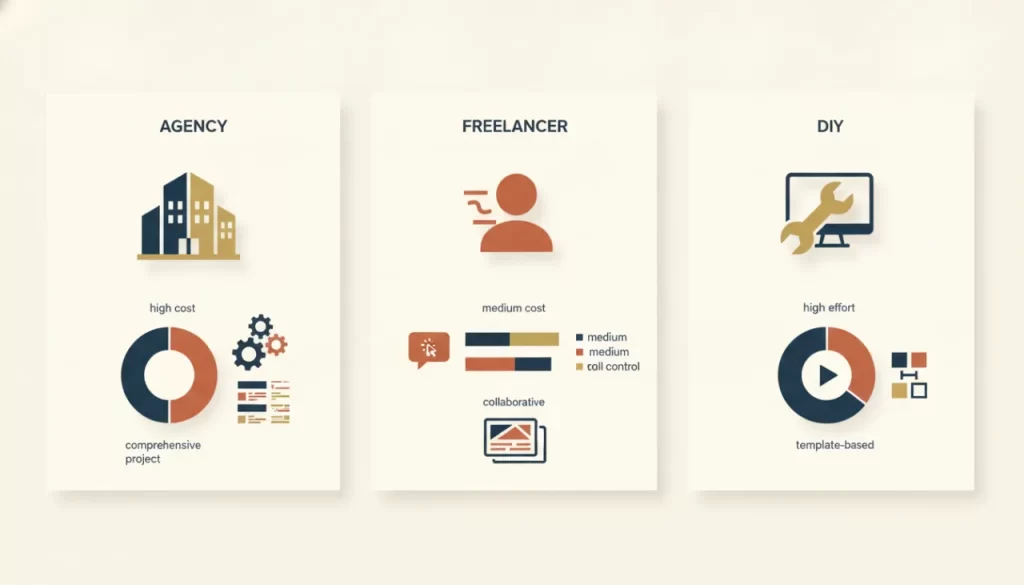
Sooner or later, every Texas business owner faces the same question: how do I actually get a website built? The three main paths — do it yourself with a builder like Wix or Squarespace, hire a freelancer, or work with a web design agency — each come with genuine advantages and real drawbacks. The trick is knowing which one matches your situation.
Here’s an honest breakdown, without the usual agency sales pitch or DIY cheerleading.
DIY Website Builders: Wix, Squarespace, GoDaddy
DIY builders have gotten genuinely better over the years. If you’re a solopreneur with a tight budget and a simple service, getting a basic site up on Wix or Squarespace is a reasonable starting point. You’ll pay somewhere in the range of $20–$40 per month, you can launch without waiting on anyone, and you maintain complete control.
The real limitations show up over time:
- SEO ceiling: These platforms have improved their SEO features, but they still trail WordPress in flexibility. You can’t implement schema markup as cleanly, page speed is often capped by the platform, and your template structure limits how well you can build out service silos.
- Template uniformity: Your site will look like other sites on the same template. In competitive local markets, that sameness works against you.
- Time cost: “Easy” builders still require real time to do well. Most business owners build a mediocre site quickly, then neglect it.
DIY makes sense for: brand-new businesses testing a concept, very low-budget situations, or professionals who genuinely enjoy this kind of work.
Freelancers: Flexibility With Real Risk
A skilled freelancer can deliver excellent work at a lower price than an agency. If you find the right person — someone with a strong portfolio, clear process, and demonstrated SEO knowledge — you can get a quality custom site without paying agency rates.
The risks are also real:
- Availability: Good freelancers are often busy. Projects can stretch or go quiet when they take on new clients.
- No bench: If your freelancer gets sick, changes careers, or simply moves on, you may lose your ongoing support with no transition plan.
- Variable expertise: Freelancers who are strong designers may be weak on SEO, or vice versa. Rarely do you get both in one person at a junior-to-mid rate.
Freelancers make sense for: businesses with a modest budget, a longer timeline, and the ability to vet carefully. Ask to see live sites they’ve built and check those sites’ performance in Google Search.
Web Design Agencies: Full Capability, Right Price Point
A real web design agency brings design, development, copywriting, SEO strategy, and ongoing support under one roof. The work is more consistent, projects run on defined timelines, and you’re not dependent on a single person’s schedule or career decisions. When something breaks, there’s a team to fix it.
The common objection is cost. It’s true that some agencies — particularly large national firms — charge rates that make no sense for a Texas small business owner. But not all agencies are the same. A Texas-based shop that focuses on local businesses will price very differently than a coastal agency building Fortune 500 brand sites.
When you work with an agency, you’re also paying for the process that catches problems before launch: SEO structure, mobile optimization, conversion testing, accessibility review. DIY and freelance projects often skip these because they take time and knowledge most clients don’t realize they need.
The Decision Framework
A few questions that point toward the right choice:
- Is my website a primary lead source, or just a digital business card? If it’s supposed to generate calls and form fills, treat it like infrastructure — agency or strong freelancer.
- Do I have time to manage a freelancer relationship, or do I need one point of contact? If you need accountability, an agency delivers it.
- Is my budget truly limited to DIY range? Start there, but plan to upgrade — most businesses outgrow template builders faster than they expect.
The Texas Web Design Co. team is built for the middle ground: agency-grade work without the coastal agency price. Take a look at our pricing and custom website services — if it fits your situation, we’ll be straight with you about it. If it doesn’t, we’ll tell you that too.
Frequently asked questions
Can I start with a DIY site and upgrade later? +
Yes, but be aware that migrating from Wix or Squarespace to a custom WordPress site isn’t free — you’ll pay for the rebuild and may lose some SEO equity in the transition. It’s often cheaper to do it right the first time if your budget allows.
How do I vet a freelancer before hiring? +
Ask for three to five live websites they’ve built, then check those sites’ speed scores and Google rankings for relevant terms. Ask specifically about their SEO process, who owns the accounts and files after launch, and what happens if you need changes six months from now.
What questions should I ask an agency before signing? +
Who owns the website and domain after launch? What’s included in ongoing support? Who specifically will work on my project? How is SEO built into the process? These four questions surface most red flags quickly.
Is a freelancer or agency better for SEO? +
An agency that bakes SEO into the build process typically delivers better results because design, development, and optimization decisions are made together. A freelancer can match this only if they have strong SEO expertise alongside their design skills, which is less common.