AI and Your Small Business Website: What’s Actually Useful in 2026
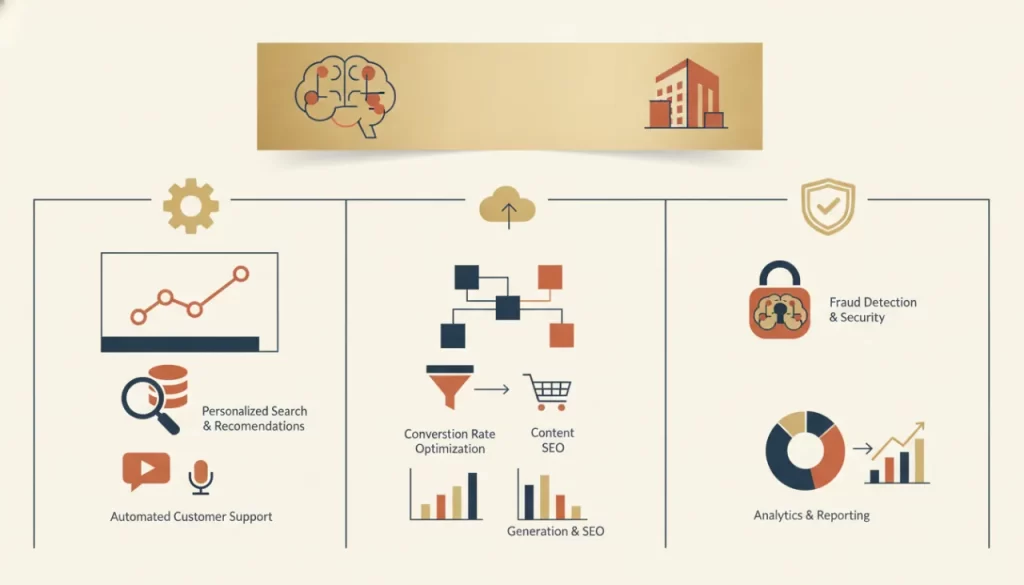
If you’ve spent any time reading about digital marketing in 2026, you’ve been told that AI is going to transform your business. Some of that is true. A lot of it is vendor hype. The useful question for a Texas small business owner isn’t “what can AI theoretically do” — it’s “what will actually save me time and produce better results without requiring a computer science degree.”
Here’s a straight look at where AI delivers and where it falls short.
Where AI Genuinely Helps
Content First Drafts
AI writing tools — Claude, ChatGPT, and others — are genuinely useful for generating first drafts of service pages, blog posts, and email campaigns. Starting from a blank page is hard. Starting from a draft that’s 60% of the way there and needs your voice and local specifics added is much easier.
The critical step most businesses skip is the editing. AI produces fluent, grammatically correct text that often sounds generic and slightly off-brand. If you publish raw AI output as your service pages and blog posts, you get content that reads like every other AI-generated website in your category. Google’s systems are increasingly capable of recognizing low-value AI content. The fix is human editing that adds local context, specific examples, and your actual voice.
Chatbot Lead Capture
A well-configured chat widget powered by AI can handle basic qualification questions, capture contact information, and route inquiries after hours when you’re not available to respond. For service businesses that get quote requests outside of business hours, this is a genuine revenue opportunity — visitors who might have left without contacting you can be captured by a chat interaction that feels immediate.
The key word is “well-configured.” A chatbot that can’t answer basic questions about your services and doesn’t collect useful lead information creates a worse experience than having no chat at all. Configuration matters more than the underlying AI technology.
Content Ideation
Coming up with a consistent stream of relevant blog topics, FAQ content, and social posts is genuinely hard. AI tools are excellent brainstorming partners here. Ask for twenty blog topic ideas for a plumbing company in Dallas and you’ll get a solid starting list in seconds. The ideas still need human judgment — you’ll discard most, refine a few, and add ones the AI didn’t think of because you know your customers — but the blank page problem is solved.
Image Generation for Social
AI image generation has reached a quality level where it’s genuinely useful for social media graphics, email headers, and blog post illustrations. It won’t replace professional photography of your actual work, but it handles generic visual needs quickly and inexpensively. Useful for businesses that need a consistent content cadence but don’t have the budget for ongoing photoshoots.
Where AI Falls Short
Local Market Knowledge
AI doesn’t know that the HVAC market in Midland is completely different from the one in San Marcos. It doesn’t know which local competitors dominate your specific zip code, what your best customers care about, or why you’re different from the guy three streets over offering the same service. That context — the stuff that makes marketing actually work in a specific market — still requires human knowledge and judgment.
Brand Voice
Every business has a voice, whether they’ve defined it deliberately or not. AI can approximate a voice with enough examples, but it defaults to a kind of bland professional register that sounds competent and forgettable. Your About page, your service descriptions, and your CTAs should sound like a person — your specific person — not like a committee drafted them. That requires human editing at minimum, and often human-written originals.
Strategy
Deciding which services to prioritize, which cities to target, how to position against local competitors, which content investments will produce the best returns — these are strategic decisions that require knowing your business, your market, and your customers. AI can provide information and frameworks, but it cannot make those calls for you.
The businesses using AI well are treating it as a productivity tool: faster drafts, faster brainstorming, cheaper visual content production. The businesses struggling with AI are the ones who delegated their content strategy entirely to it and ended up with generic websites that rank poorly and convert worse.
If you want a website that combines smart use of current tools with genuine strategy and local knowledge, our care plans include ongoing content support, and our SEO services are built on strategy, not shortcuts. Let’s talk about what’s actually going to move the needle for your business.
Frequently asked questions
Can I use AI to write all of my website content? +
You can use it to generate drafts, but publishing raw AI content is risky. Google increasingly identifies and discounts low-quality AI-generated content, and it often lacks the local specificity and brand voice that make local business content perform well. Use AI for drafts and edit thoroughly.
Which AI chatbot tools work well for small business websites? +
Several tools integrate well with WordPress and other platforms — Tidio, Intercom, and Drift are widely used options. The technology matters less than how you configure it: you need clear scripts, proper lead capture fields, and quick follow-up on any leads it collects.
Will AI replace web designers for small businesses? +
Not for businesses where the website is a primary lead source. AI can generate basic templates, but the strategy, conversion optimization, local SEO structure, and performance tuning that make a website actually generate calls still require human expertise.
Is AI-generated content against Google’s guidelines? +
Google’s position is that helpful, accurate content is valued regardless of how it was produced — human or AI. What they penalize is low-quality, thin, or misleading content. AI content that’s been edited for accuracy, local relevance, and genuine usefulness is not inherently problematic.