What Is Topical Authority and Why It Beats Chasing Backlinks
For years, SEO felt like a link-counting contest. Whoever had the most backlinks won. That was never entirely true, and in 2026 it’s even less accurate. Google has spent a decade getting better at understanding whether a website genuinely knows what it’s talking about — not just whether other sites point to it. That shift is good news for Texas small businesses willing to invest in real content.
What Topical Authority Actually Means
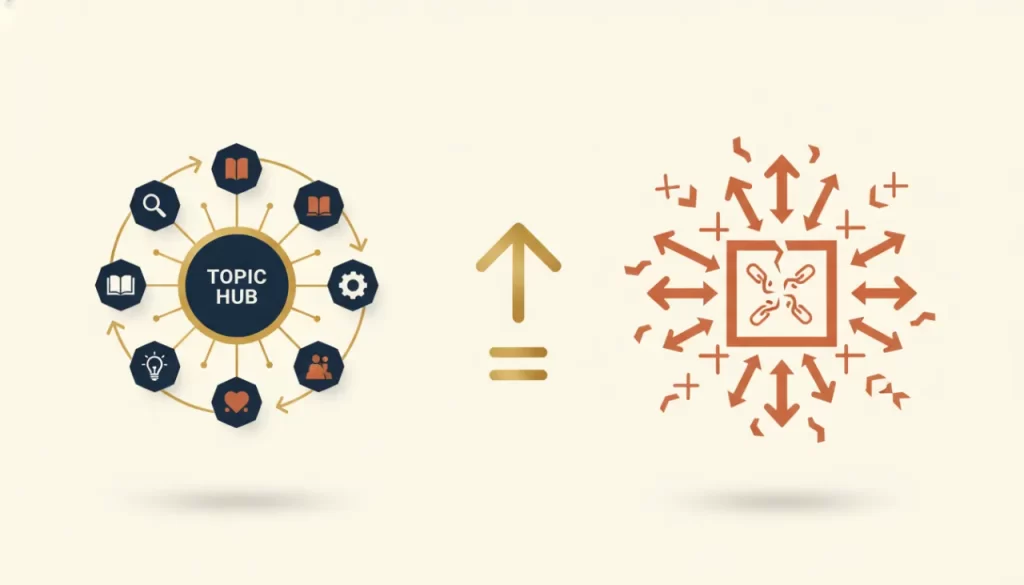
Topical authority is Google’s confidence that your website has comprehensive, credible coverage of a subject area. It’s not about having one great page. It’s about having a cluster of useful, interconnected content that demonstrates real expertise across the full range of questions your customers ask.
Think about it from Google’s perspective: if every time someone searches for anything related to “HVAC repair in Waco,” your site has a relevant, well-written answer, Google starts treating you as the authority on that topic in that market. That reputation compounds across searches.
Why Backlink Chasing Falls Short for Local Businesses
Here’s the problem with a link-first strategy for a local Texas business: the links you can realistically earn are limited. You’re not getting a New York Times backlink. Local businesses compete for links from local news sites, chambers of commerce, and industry directories — and those are valuable, but they don’t scale quickly.
Meanwhile, building a content cluster — 15 to 25 well-researched posts covering every angle of your service area — is entirely within your control. You can execute it in six months. And once Google recognizes the depth of your coverage, the rankings follow for the whole cluster, not just one page.
What a Content Cluster Looks Like in Practice
Take a Texas landscaping company as an example. The cluster might include:
- A pillar page: “Landscaping Services in San Antonio”
- Supporting posts: lawn care timing by season in Texas, drought-resistant plants for Central Texas, irrigation system installation guide, how to choose a landscaping contractor, what affects landscaping costs
- City pages: specific pages for surrounding cities they serve
Every supporting piece links back to the pillar service page. The pillar links to the most relevant supporting content. Over time, this web of related content makes the site the obvious local authority on landscaping — not because it has hundreds of backlinks, but because it genuinely answers every question a San Antonio homeowner might ask.
The Role of E-E-A-T in Topical Authority
Google’s quality guidelines emphasize Experience, Expertise, Authoritativeness, and Trustworthiness (E-E-A-T). Topical authority feeds directly into the Expertise and Authoritativeness signals. When a site covers a topic consistently, accurately, and in depth, it signals genuine expertise. When that content is backed by real credentials, local presence, and consistent brand identity, the full E-E-A-T picture comes together.
This is why thin content — a dozen 300-word posts that barely touch a topic — doesn’t build authority. Depth matters. Accuracy matters. Content that actually helps the reader, written by someone who knows the subject, is what Google rewards.
Backlinks Still Matter — Here’s Where They Fit
None of this means backlinks are irrelevant. Domain authority still influences overall ranking potential, and high-quality links from reputable local sources accelerate the process. The point is priority. For most small businesses, building topical authority through a focused content strategy delivers better ROI than spending the same effort on link outreach. The right approach combines both — solid content cluster first, then earn links through genuine community presence. Our SEO services are built around this combined strategy.
How Long Does It Take?
Building topical authority is a six-to-twelve month effort for most local markets. That sounds long, but the results are durable. Unlike paid ads that stop the moment you stop paying, a strong content cluster continues to drive organic traffic for years. You’re building an asset, not renting visibility.
If you’re ready to build a content strategy that compounds over time, our care plans include ongoing content support — or reach out to talk about a custom SEO strategy for your Texas business.
Frequently asked questions
How many posts do I need to build topical authority? +
It depends on the topic and competition level. For most local service areas, a cluster of 15 to 25 pieces covering your core topic from multiple angles is enough to establish clear authority. Quality matters more than volume.
Can a new website build topical authority quickly? +
New sites start with less inherent trust, but consistent, high-quality content still builds authority over time. A focused content cluster often helps new sites rank faster than a scattered, random approach.
Should I cover broad topics or stay hyper-niche? +
For local businesses, depth on your specific service niche and geographic area beats breadth. It’s better to be the undisputed authority on ‘roofing in Lubbock’ than a mediocre authority on home improvement generally.
How is topical authority different from domain authority? +
Domain authority (DA) is a third-party metric reflecting the overall strength of a website’s backlink profile. Topical authority is about demonstrated expertise in a subject area. Both matter, but topical authority is more actionable for content strategy.